

 Log in
 If you’re training for your private pilot certificate, you’ve likely heard instructors and examiners reference “the ACS” as if it needs no explanation. Many students nod along, recognizing the term without fully understanding how it fits into their training.
That’s normal. Here’s what the ACS is—and why it matters.
The private pilot ACS—short for Airman Certification Standards—is the FAA’s published standard for what’s required to earn a private pilot certificate. It defines what you must know, how you must manage risk, and what you must demonstrate in the airplane. Once you understand how it works, it becomes the most valuable resource in your training.
This article breaks down what the ACS private pilot document actually is, how examiners use it, how it connects directly to the FAA written exam, and how to study it the right way.
Understanding the Private Pilot ACS
The Airman Certification Standards (ACS) is the FAA document that defines the knowledge, risk management, and skill requirements for earning a pilot certificate. For private pilots, it governs both the practical test (checkride) and the standards underlying the FAA knowledge exam.
The ACS replaced the old Practical Test Standards (PTS) in 2016 to better align training, testing, and real-world decision-making, unlike the PTS—which focused primarily on maneuvers and numerical tolerances—the private pilot ACS evaluates whether applicants understand why procedures matter, what risks are involved, and how to manage those risks safely.
Every task in the ACS is built around three required elements:
- Knowledge – What you must understand
- Risk Management – What could go wrong and how you mitigate it
- Skills – What you must physically demonstrate
This structure reflects how pilots operate outside of training environments. The FAA is not looking for memorized answers or isolated maneuvers—it’s looking for sound judgment, risk awareness, and consistent, safe performance.
If a task appears in the ACS private pilot document, it is eligible for evaluation on your checkride. There are no hidden standards and no additional requirements beyond what’s published.
The Role of the ACS in Flight Training
This is what’s important to understand early in training: The ACS is not something you cram during checkride week. It is the framework that guides your entire training process.
Your instructor isn’t randomly choosing lessons or maneuvers. Every flight lesson, ground session, and endorsement ties back to specific tasks in the private pilot ACS. When an instructor signs you off for the checkride, they’re certifying that you meet published FAA standards—not personal preference or local practice.
Once students understand this, training stops feeling vague and starts feeling intentional. You can see where you are in the process, identify weak areas early, and study with purpose instead of guessing what might come up on checkride day.
How the Private Pilot ACS Is Structured
The private pilot ACS is organized into Areas of Operation, each made up of individual Tasks that an examiner may evaluate during the checkride.
Each Area of Operation groups related skills and knowledge so evaluation follows the natural flow of a flight—from planning, to execution, to shutdown. Key Areas of Operation include:
- Preflight Preparation – Regulations, weather interpretation, cross-country planning, and aircraft systems
- Preflight Procedures – Aircraft inspections, flight deck management, and weight and balance
- Airport Operations – Taxi procedures, runway incursion avoidance, and traffic pattern operations
- Takeoffs, Landings, and Go-Arounds – Normal, short-field, soft-field operations, and judgment during unstable approaches
- Performance and Ground Reference Maneuvers – Steep turns, slow flight, and ground reference maneuvers
- Navigation – Pilotage, dead reckoning, and navigation systems, including GPS/RNAV
- Slow Flight and Stalls – Aircraft behavior near performance limits and proper recovery techniques
- Emergency Operations – Engine failures, system malfunctions, and emergency decision-making
- Night Operations – Additional planning considerations and risk management unique to night flight
- Postflight Procedures – Aircraft shutdown, securing, and servicing procedures
Each task is evaluated using the same three elements: knowledge, risk management, and skills. Failing to meet the standard in any one of those areas means the task has not been successfully completed.
How ACS Codes Connect the Written Exam to Your Checkride
This is one of the most important—and least understood—parts of the private pilot ACS.
Every knowledge element in the ACS is assigned a specific ACS code. These codes are what link your FAA knowledge test directly to your practical test.
Here’s why that matters:
- Every missed question on your FAA knowledge exam is tied to an ACS code
- Those codes appear on your Airman Knowledge Test Report
- Your examiner is required to review the applicable ACS areas during the oral portion of your checkride
In other words, the written exam doesn’t disappear once you pass it. Any weak areas identified on the knowledge test are expected to be addressed and understood before you earn your certificate.
This design is intentional. The ACS ensures applicants demonstrate comprehension and sound aeronautical decision-making—not just short-term memorization.
Required Tasks vs. Examiner Discretion
A common misconception is that examiners can test anything they want during a checkride. In reality, the private pilot ACS is very specific about what must—and must not—be evaluated.
The ACS:
- Identifies required tasks that must be evaluated on every checkride
- Allows examiners discretion when selecting from optional tasks
- Encourages scenario-based testing, where multiple ACS elements are evaluated within a single realistic situation
Because of this structure, two applicants may have slightly different checkride experiences—even with the same examiner. That variation is intentional and controlled, not arbitrary.
The checkride follows published standards. It is structured, transparent, and designed to evaluate real-world decision-making—not to surprise applicants.
How Risk Management Is Evaluated in the ACS
This point cannot be overstated: You can fly a maneuver within standards and still fail the task if your risk management is deficient.
The private pilot ACS evaluates risk management as a distinct requirement—not a supporting consideration. Examiners are assessing whether you can recognize hazards, evaluate their impact, and apply reasonable mitigation strategies before and during flight.
This does not require memorized models or buzzwords. It requires clear thinking.
If an examiner asks, “What are the risks here?” and you cannot identify them or explain how you would manage them, that signals a gap in aeronautical decision-making—regardless of how well the maneuver itself was flown.
The ACS Is a Standard—Not a Teaching Syllabus
The private pilot ACS defines evaluation standards, not how flight instructors must teach.

Instructors are free to organize lessons, combine tasks, and sequence training in ways that best fit the student and operating environment. While teaching methods may vary, the end goal remains the same: meeting published ACS standards for certification.
Understanding this distinction helps set appropriate expectations. Differences in lesson structure do not indicate inconsistency or missed requirements—they reflect different instructional approaches working toward the same FAA-defined outcome.
How to Study the Private Pilot ACS Effectively
Here’s how to use the private pilot ACS as an effective study resource—not just something you skim before the checkride.
Study by Task, Not by Topic
Instead of studying individual subjects in isolation, study them within the relevant ACS task. Weather knowledge makes more sense when paired with cross-country planning or preflight decision-making.
Practice Explaining Concepts Out Loud
The oral portion of the checkride is a discussion, not a recitation. If you can explain a concept clearly without relying on memorized scripts, you understand it well enough to apply it.
Connect Knowledge Across Areas
The ACS is intentionally interconnected. Weather affects performance. Performance affects route planning. Route planning affects risk management. Study with those relationships in mind.
Know the Standards Precisely
Altitude, airspeed, and heading tolerances listed in the ACS are minimum acceptable performance—not suggestions. Know them accurately and consistently.
Treat Risk Management as a Core Skill
For every task, ask what hazards exist, what cues would indicate a developing problem, and what actions would reduce the risk.
Pay Attention to Special Emphasis Areas
Runway incursion avoidance, collision avoidance, stall/spin awareness, and aeronautical decision-making appear throughout the ACS because they’re consistently linked to real-world accidents. Examiners expect applicants to treat these areas seriously.
Use ACS-Aligned Study Resources
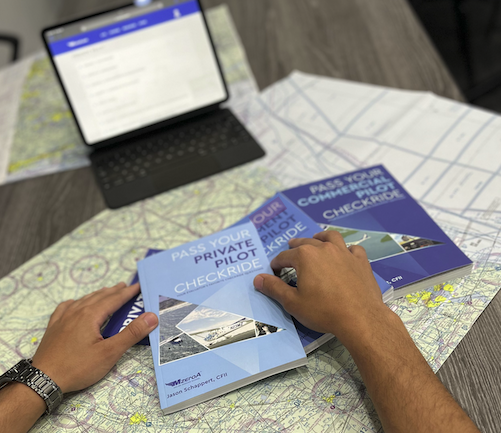
Many students find it helpful to use study resources that are built directly around the ACS structure. MzeroA’s ground school is designed to align lessons and practice questions with ACS tasks, helping students focus on what the FAA actually evaluates rather than memorizing disconnected information.
Where to Access the Private Pilot ACS
The FAA publishes the private pilot ACS directly on its website at no cost. It’s important to verify that you’re using the current version, as updates are occasionally issued.
Your checkride will be evaluated against the version of the ACS in effect on the day of your test—not an older copy saved to a device or shared years ago. When in doubt, always reference the FAA-issued document.
Preparing with the ACS: Final Takeaways
The private pilot ACS gives students a clear, consistent standard for how they’re evaluated—but its real value is in how it shapes preparation. When you understand how the ACS private pilot framework works, training becomes more focused. The FAA written exam connects logically to flight training, and the checkride feels like a continuation of that process rather than a separate hurdle.
That’s why using ACS-aligned study materials matters. At MzeroA, ground school lessons and practice questions are structured around ACS tasks and standards, helping students prepare for what the FAA actually evaluates—not just what’s easy to memorize.
When expectations are clear and preparation is aligned, confidence follows. And that combination of clarity, preparation, and sound decision-making is exactly what the ACS is designed to assess.