
Every IFR flight begins with a clearance. While it can feel rushed and unmanageable at first, it’s not unpredictable.
IFR clearances follow a standard structure. Once you understand that structure, you’ll stop struggling to keep up and begin to recognize what’s coming next.
This guide walks through how to:
- Organize a clearance using CRAFT
- Read it back correctly
- Understand clearance void times
- Request IFR in-flight when conditions change
If you’re still getting comfortable with how to pick up IFR clearance [https://www.mzeroa.com/airplanes/how-to-pick-up-an-ifr-clearance-step-by-step-guide-for-pilots/], this builds directly on that foundation.
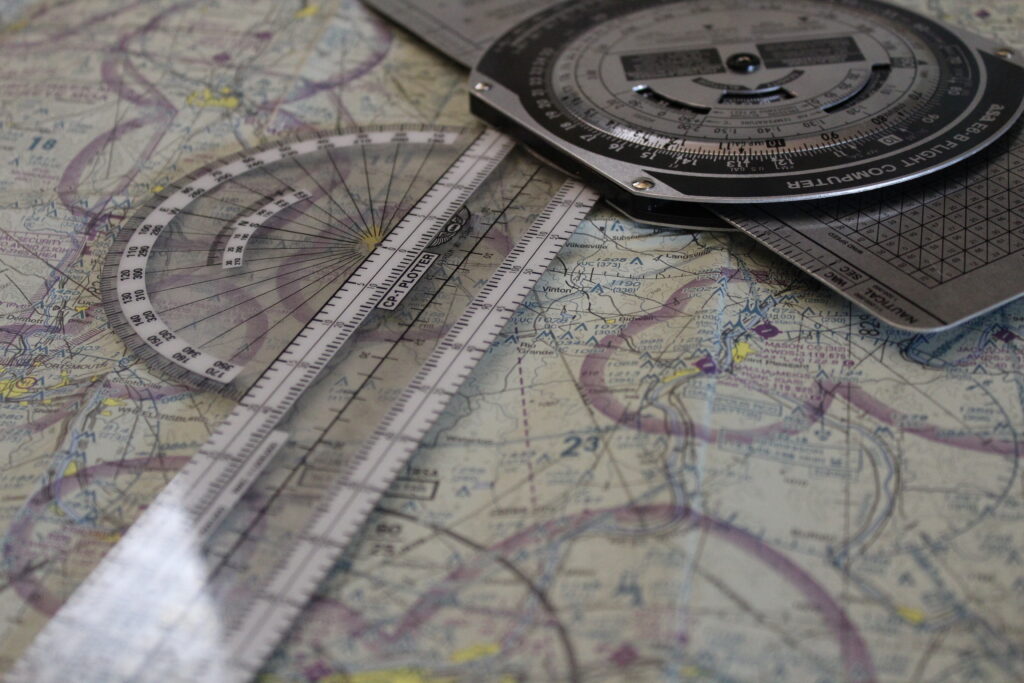
Breaking Down the CRAFT Acronym
IFR clearances follow a predictable format:
C — Clearance Limit
R — Route
A — Altitude
F — Frequency
T — Transponder
This isn’t just something to memorize—it’s how you capture the clearance in real time.
Clearance Limit
The clearance limit is your IFR destination or endpoint.
Most often, it’s your destination airport: “Cleared to Orlando Executive Airport…”
But in some cases, you may be cleared to a fix instead. When that happens, ATC will include an EFC (Expect Further Clearance) time.
That EFC ensures you’re not left without instructions if further clearance isn’t received before reaching that point.
Route
The route tells you how ATC wants you to get there.
You might hear:
“Fly the RNAV departure, then as filed.”
“Direct HAWKK, then Victor 25, then direct.”
“Cleared as filed.”
“Cleared as filed” typically means your filed route already matches expected routing—no changes needed.
Altitude
Altitude instructions can include both what to fly now and what to expect later:
“Climb and maintain 3,000.”
“Climb via SID.”
“Maintain 3,000, expect 6,000 one-zero minutes after departure.”
The key distinction:The assigned altitude is what you are cleared to fly.
The expected altitude is planning information only and does not authorize a climb.

Frequency
This is your departure frequency—the frequency you’ll switch to after takeoff.
“Departure frequency 135.35.”At a non-towered airport, this may be a Center frequency instead of departure control. If you haven’t worked through how this process differs, reviewing procedures for a non-towered airport [https://www.mzeroa.com/ifr-clearance-non-towered/ ] can help connect the full picture.
Transponder
Finally, your squawk code: “Squawk 4521.”
Set it prior to departure and confirm ALT mode so ATC can identify you on radar.
IFR Clearance Readback Technique
Copying the clearance is only half the process.
The readback confirms that what you heard (and what ATC intended) match exactly.
What to Read Back
When operating IFR, read back the entire clearance:
Clearance limit, route, altitude, frequency, and squawk.A clean readback sounds like: “N12345, cleared to Orlando Executive via the MUGON1 departure, then as filed. Climb and maintain 3,000, expect 6,000 one-zero minutes after departure. Departure 135.35, squawking 4521.”
Common Mistakes
Don’t say “roger”– that acknowledges receipt, not accuracy.
Don’t rush – speed increases errors.
Don’t skip items – even if they seem obvious.
If anything is unclear: “N12345, request full clearance again.”
That’s ok. Guessing is not.
Write First, Then Read Back
Trying to read back while still writing is where most errors happen.
Instead:
- Let ATC finish
- Write it in CRAFT order
- Then read it back
Clearance Void Time Requirements
For IFR departures from non-towered airports, clearance void times are critical.You’ll hear: “Clearance void if not off by 1530 Zulu. If not off, advise not later than 1540 Zulu of intentions.”
The Void Time
This is your departure deadline.
You must be airborne (not just rolling) by the void time.
If you’re not airborne, the clearance is no longer valid.
The “Advise Not Later Than” Time
If you don’t depart, you must contact ATC by this time.
If you don’t, alert procedures may begin.
Why This Matters
At a non-towered airport, ATC cannot see you depart.
Void times allow them to safely separate IFR traffic by knowing exactly when you enter the system—or confirming that you didn’t.
When to Request Pop-Up IFR
A pop-up IFR clearance is requested while airborne.
This typically happens when conditions change:
- Weather deteriorates
- Cloud layers block your route
- Destination weather drops below minimums
- You encounter IMC unexpectedly
This isn’t unusual—it’s using the system as intended.
How to Request Pop-Up IFR
Start with: “Jacksonville Center, N12345, request.”
Then: “N12345 is a Cessna 172, VFR, 30 miles southwest of Daytona, 6,500 feet. Request pop-up IFR to Orlando Executive. Information Bravo.”
What ATC Needs
Keep it simple:
Who you are
Where you are
Your altitude
What you want
ATIS (if available)
What Happens Next
ATC may:
- Issue the clearance
- Ask you to standby
- Vector you while coordinating
Once cleared, you are operating IFR.
Workload Consideration
If conditions are deteriorating:
Stabilize the aircraft first.
Then make the request.
Aviate. Navigate. Communicate.
IFR Clearance Example
You: “Gainesville Clearance, N12345, IFR to Orlando Executive, Information Delta, ready to copy.”
ATC: “N12345, cleared to Orlando Executive via MUGON1 departure, then as filed. Climb and maintain 3,000, expect 6,000 one-zero minutes after departure. Departure frequency 135.35. Squawk 4521.”
CRAFT Breakdown
C — Orlando Executive
R — MUGON1 departure, then as filed
A — 3,000, expect 6,000
F — 135.35
T — 4521
Readback
“N12345, cleared to Orlando Executive via MUGON1 departure, then as filed. Climb and maintain 3,000, expect 6,000 one-zero minutes after departure. Departure 135.35, squawking 4521.”
ATC: “N12345, readback correct.”
Closing Thoughts
The IFR system is not as intimidating as it sounds on day one. It’s a language. And like any language, fluency comes from repetition.
CRAFT gives you a framework. Readbacks give you a way to verify. And understanding things like void times and pop-up IFR helps you stay ahead of situations instead of reacting to them.You don’t need to be perfect on your first clearance. You just need to know the system well enough to work within it and know when to ask for a repeat, a slower pace, or a little extra help.
And over time, what once felt difficult becomes a process you can manage consistently.