
If it’s been a while since you last flew, you’re not alone.
Life has a way of interrupting flight training—careers change, schedules fill up, finances shift. Before you know it, months (or years) have passed since you last logged time. And now, even though the desire to fly is still there, getting back in the flight deck feels… intimidating.
That doesn’t mean you stopped being a pilot. It just means you’re a rusty pilot.
Being a Rusty Pilot Doesn’t Mean Starting Over
Rust doesn’t erase what you learned—it just dulls the edges.
Your aeronautical knowledge, muscle memory, and judgment are still there. They just need to be refreshed and reorganized. The key is doing that intentionally, instead of hoping everything comes back during a flight review.
A methodical refresh helps you identify gaps early, so time with a certified flight instructor is spent reinforcing fundamentals and steadily rebuilding proficiency.
How Rust Impacts Pilot Proficiency
For most returning pilots, rust shows up in predictable ways. ATC radio communication feels less natural. Systems knowledge isn’t as sharp as it used to be. Aeronautical decision-making slows under workload.
Most importantly, confidence takes the biggest hit—and when confidence slips, every other skill is harder to access under pressure.
Without a clear plan, it’s easy to spend flight time working through issues that could have been addressed more efficiently on the ground.
Why Flight Time Alone Isn’t Enough
It’s a common instinct: I’ll just get back in the airplane and it’ll come back.

A few flights with a CFI. Some pattern work. Shake off the nerves and move on.
The problem is that flight time alone doesn’t fix the underlying rust—it often just exposes it. Without a refreshed knowledge base, pilots end up spending valuable airtime relearning regulations, procedures, and systems that should already feel familiar.
That slows progress, increases workload, and can make flying feel harder than it needs to be.
When the groundwork isn’t there, flight training becomes reactive instead of intentional. You’re fixing things as they pop up, rather than building proficiency in a structured way. Over time, that can turn what should be a confidence-building process into a frustrating one.
The most efficient return to flying starts before the airplane ever leaves the ground.
What a Smart Rusty Pilot Refresher Looks Like
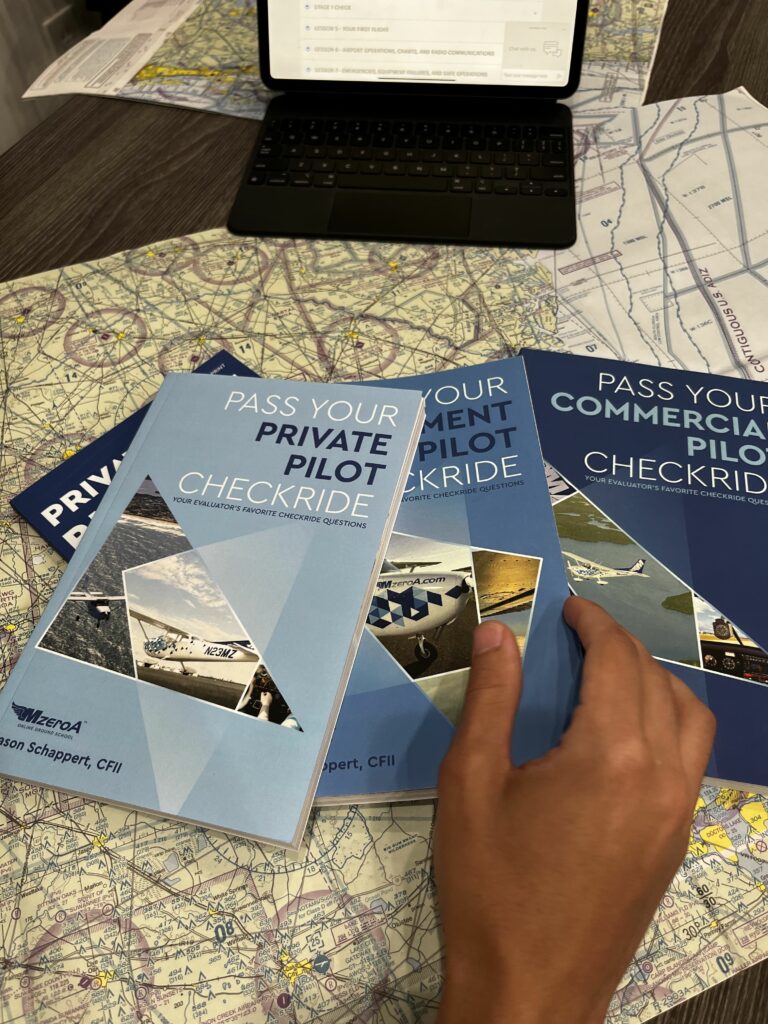
There isn’t one single way to return to flying—and that’s a good thing.
For many pilots, the most effective refresher isn’t a standalone “rusty pilot course,” but a structured return to the same foundational material that worked the first time—this time with experience to guide it.
That’s where a flexible ground school approach makes the difference.
With MzeroA’s online pilot training courses, students and pilots can revisit Private Pilot online ground school content intentionally focusing on the topics that matter most to them. Airspace. Weather interpretation. Aeronautical decision-making. Aircraft systems. Radio procedures. Whatever feels least familiar after time away.
Instead of sitting through material you already know, you can:
- Jump directly into specific lessons where you feel rusty
- Rewatch complex topics as many times as needed
- Use knowledge checks to confirm what’s solid and what needs reinforcement
- Study at your own pace, on your own schedule
This approach mirrors how experienced pilots learn. You’re not starting from scratch; You’re reinforcing, refining, and reconnecting the dots.
Most importantly, it lets flight time do what it’s meant to do: apply knowledge, build proficiency, and restore confidence—not pause mid-lesson to relearn ground concepts that are easier to review on the ground.
A smart refresher doesn’t rush the process. It gives you control over it.
What to Expect When You Start Flying Again
One of the biggest mistakes rusty pilots make is underestimating the adjustment phase.
The first few flights back can feel awkward—even if you’ve done plenty of preparation. Flows feel slower. Radio calls take more thought. You might overbrief things that used to be automatic. That’s not regression, it’s recalibration.
Most pilots experience the return in phases.
At first, you’re rebuilding familiarity. The flight deck stops feeling foreign. Muscle memory starts to wake up. Tasks that felt mentally heavy begin to lighten.
Next comes consistency. Maneuvers smooth out. Decision-making speeds up. You’re no longer just reacting—you’re staying ahead of the airplane again.
Finally, confidence settles back in—not because everything is perfect, but because you trust your ability to manage the airplane, the environment, and yourself.
That process takes different amounts of time for different pilots. Some move quickly. Others take a little longer. Both are normal—and both are successful when the return is intentional.
The goal isn’t to rush back to where you were. It’s to build back to where you can fly safely, comfortably, and confidently now.
Flying Today Looks Different Than It Used To
Even if your flying skills come back quickly, the environment you’re returning to may not look exactly like the one you left.
Regulations evolve. Airspace procedures get refined. Technology becomes more integrated. None of these changes are dramatic on their own—but together, they can catch returning pilots off guard.
Today’s flight decks are more likely to include tablets, digital charts, GPS-driven workflows, and ADS-B traffic and weather. Airspace awareness relies more heavily on real-time information. Weather products are richer—but require interpretation. Even radio expectations and airport operations continue to evolve.
That’s not a bad thing. It just means flying in 2026 assumes a baseline level of familiarity with tools and procedures that may not have existed—or been common—when you last flew.
This is where a structured ground refresher becomes especially valuable.
Using an up-to-date ground school like MzeroA allows returning pilots to re-enter flying with current information, not outdated assumptions. Lessons are updated as regulations and best practices change, so you’re reviewing what actually applies now—not what applied years ago.
A refresher isn’t about starting over. It’s about making sure your knowledge still matches the way flying is done today.
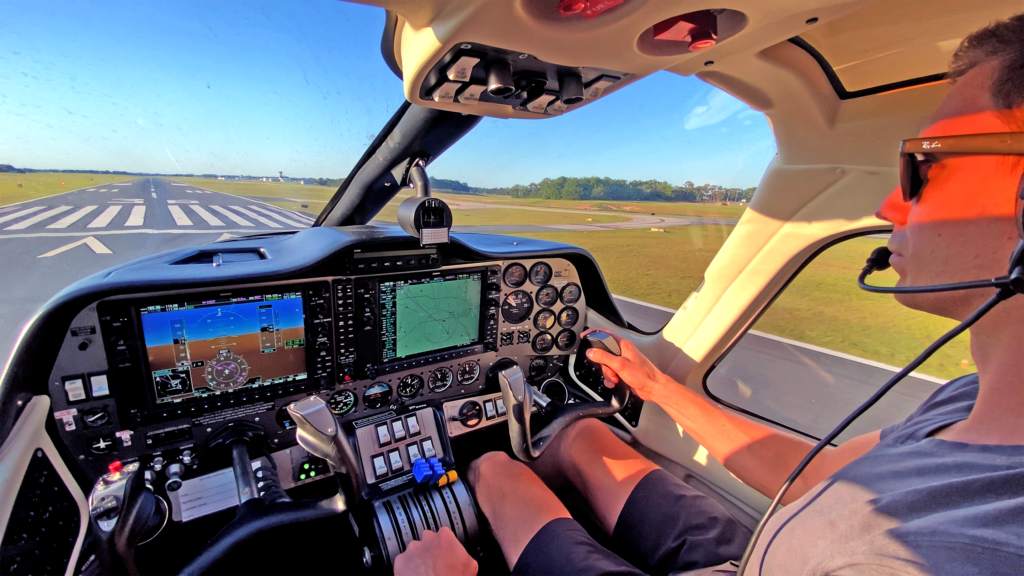
A Smart Way to Come Back to Flying
Returning to flying is an investment—not just of money, but of time and focus. Most rusty pilots need several hours of dual instruction to feel comfortable again, and how you prepare makes a real difference in how those hours are spent.
Starting with a structured ground refresher helps you show up ready. You’re not relearning everything in the airplane or chasing gaps as they appear. Instead, you’re reinforcing fundamentals, focusing on weak areas, and using flight time for what it’s best at—building proficiency and confidence.
That approach leads to more productive lessons, better use of instructor time, and a return to flying that feels steady instead of overwhelming.
If flying is still calling you, the best next step is to start intentionally. Rebuild your foundation on the ground. Then return to the flight deck with a plan and an instructor who understands what rusty pilots need.
When you’re ready, dust off that logbook, make a plan, and take the next step back into the flight deck.